
Sectors
Construction and Infrastructure
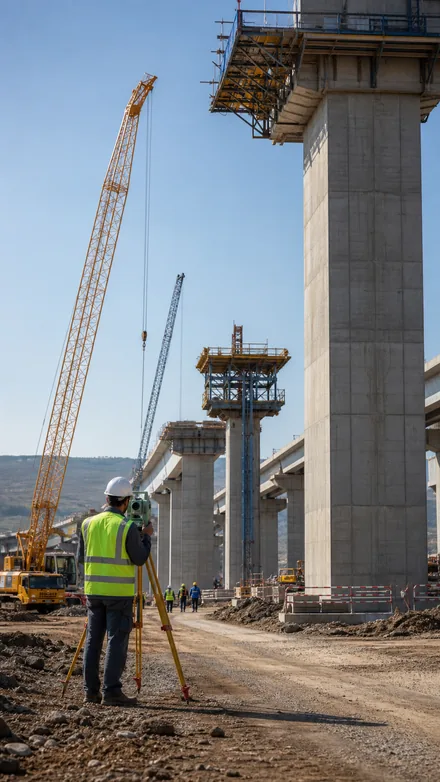
Construction and infrastructure projects are high-value relationships with a great deal of technical uncertainty, lasting for years between the employer (a public authority or a company), the contractor, subcontractors, consultants, building inspection firms, suppliers and financial institutions. A contractual gap that looks small at the start of a project can, as the work progresses, turn into serious consequences such as extensions of time, additional costs, deductions from progress payments or the calling of a performance bond.
In Mersin, construction activity covers a wide range, from residential and urban regeneration projects to port, logistics, industrial and energy investments. On this page I discuss the legal issues faced by contractors and project parties. I cover construction in exchange for land shares and real estate development separately on the Real Estate page.
Public Tenders
Tender Preparation and Qualification Documents
In works tenders under Public Procurement Law No. 4734, whether a bid is taken into evaluation depends on the documents being prepared completely and correctly. Even a formal error in documents such as work experience certificates, joint venture and consortium structures, the bid letter and the bid bond (geçici teminat) can lead to the bid being rejected. Explanations given in response to abnormally low bid enquiries also require particular care.
Complaints, Appeal Complaints and Administrative Courts
Against an act in the tender process, a complaint (şikâyet) is first made to the contracting authority, followed by an appeal complaint (itirazen şikâyet) to the Public Procurement Authority (Kamu İhale Kurumu); an action can then be brought in the administrative courts against the Authority’s decisions. Each of these stages is subject to short, preclusive time limits. If a time limit is missed, even a well-founded objection is rejected without being examined.
Debarment from Public Tenders
Certain acts during the tender or contract process may lead to a decision debarring the contractor from participating in public tenders. Because such decisions affect all of the company’s public work, an early legal assessment should be made in any situation that could lead to debarment proceedings.
Works Contracts and Contract Management
Unit Price, Lump Sum and Turnkey Contracts
The price structure of the contract determines who bears the risk of changes in the quantity of work. In unit price contracts, the bills of quantities are decisive; in lump sum and turnkey contracts, the clarity of the project scope and the technical specifications is decisive. A work item whose scope is left unclear is one of the items most often disputed later on.
FIDIC and International Contract Models
Standard contract models such as FIDIC are used in internationally financed projects and in work for foreign employers. Under these models, giving claim notices within specific time limits, the role of the engineer and the dispute board mechanism are critical for protecting rights.
Subcontracts
The obligations in the main contract need to be passed down to the subcontractor on the same terms, payment terms need to be set up consistently with the main contract, and occupational safety responsibilities need to be clearly allocated. Otherwise, the contractor may find itself unable to claim against the subcontractor for a defect for which it is liable to the employer.
Work Programme, Extensions of Time and Additional Costs
Delay, Extension of Time and Delay Penalties
The cause of a delay in the work determines who is responsible. Delays caused by the employer, force majeure and extraordinary circumstances can be grounds for an extension of time. For this, the event causing the delay must be notified in writing and on time, and documented with site records and revisions to the work programme. Failure to give notice weakens even a justified claim for an extension of time.
Increase in Work, Changes to the Estimate and New Unit Prices
The scope of the work may grow because of design changes, ground conditions or additional requests from the employer. The limits on increases in work, how new unit prices will be determined and the approval required for additional work should be made clear both in the contract and in practice. Recovering payment for additional work carried out without written approval often turns into a lengthy dispute.
Price Adjustment and Cost Increases
In long-term projects, increases in material and labour costs can upset the balance of the contract. In public contracts, the price adjustment (fiyat farkı) rules are considered; in private contracts, price adjustment clauses and, in unforeseeable circumstances, the provisions on excessive difficulty of performance (aşırı ifa güçlüğü) in the Turkish Code of Obligations (TBK) are considered.
Progress Payments, Acceptance and Security
Progress Payments and Deductions
Quantities, deductions and late payments in progress payment (hakediş) reports directly affect the contractor’s cash flow. Entering reservations on progress payments and raising objections on time are important for being able to make claims later on; progress payments signed without reservation may narrow the scope for later objection.
Provisional Acceptance, Final Acceptance and Outstanding Work
Missing and defective work identified at provisional acceptance (geçici kabul) must be remedied before final acceptance (kesin kabul). The content of the acceptance reports is decisive for the return of security and for the start of liability periods.
Performance Bonds and the Risk of a Call
A performance bond (kesin teminat mektubu) gives the employer strong security and can be called independently of the underlying contract. In the event of a possible wrongful call, it is important for the contractor to apply quickly for an interim injunction (ihtiyati tedbir) and to monitor the term of the bond and the conditions for its return.
Defective Work and Contractor Liability
Defects and Latent Defects in Contracts for Work
The contractor is responsible for ensuring that the building it delivers complies with the contract, the design and technical rules. Under the Turkish Code of Obligations, liability for defects in immovable structures lasts five years from delivery, or twenty years if the contractor is grossly at fault. Notifying the defect on time and preserving the evidence, if necessary through a court-ordered preservation of evidence (delil tespiti), determines the outcome of the dispute.
Building Inspection, Building Permits and Occupancy Permits
Shortcomings in the building permit, building inspection and occupancy permit (iskân, yapı kullanma izni) stages can lead both to administrative sanctions and to disputes with buyers. The building contractor authorisation certificate (yapı müteahhitliği yetki belgesi) and the consequences of work that does not comply with the permit also fall within the contractor’s area of responsibility.
Occupational Health and Safety on Site and Employees
Workplace Accidents and Joint Liability
Construction is one of the sectors with the highest risk of workplace accidents. Documenting the risk assessment, training and supervision obligations under Occupational Health and Safety Law No. 6331 becomes decisive in the event of an accident, both in compensation claims and in criminal investigations. The principal employer and the subcontractor may be jointly liable towards the subcontractor’s employees; recourse claims by the Social Security Institution (SGK) also come into play.
Setting Up the Subcontracting Relationship Correctly
If the subcontracting (alt işveren) relationship is not set up in accordance with the law, the subcontractor’s workers may be deemed to have been employees of the principal employer from the outset. Dividing the work appropriately, defining the jobs that require specialised technical know-how and drafting the contracts accordingly prevents this risk.
Infrastructure Projects
Expropriation, Easements and Route Issues
In infrastructure projects such as roads, water, natural gas, electricity and communication lines, expropriation (kamulaştırma), easements or temporary use are required for the properties along the route. Delays in these processes directly affect the contractor’s work programme and are an important ground for claims for extensions of time.
Public-Private Partnerships and Project Finance
In large infrastructure investments, public-private partnership models such as build-operate-transfer and project finance are used. In these structures, consistency between the implementation agreement, the loan agreements, the security package and the subcontracts is essential for the sustainability of the project.
Resolving Construction Disputes
Construction disputes are cases with a strong technical side, in which the examination by a court-appointed expert (bilirkişi) determines the outcome. Site logs, reports, correspondence, progress payments, photographs and work programmes should be kept in good order while the work is in progress, not only once the dispute arises. For commercial monetary and compensation claims, mediation before filing a lawsuit is mandatory; if provided for in the contract, dispute board and arbitration procedures are also followed.
Scope of Legal Work in Construction and Infrastructure
In construction projects, legal support is most effective when it starts before a tender is entered or a contract is signed. Identifying contractual risks from the outset, giving notices on time and establishing a record-keeping system prevent most of the disputes that might arise at the end of a project.
As Attorney Ezgi Çalışkan, I support contractors, subcontractors and project owners in public tenders and objection procedures, works contracts and subcontracts, extension of time and additional cost claims, progress payment and acceptance processes, performance bonds, defective work, occupational health and safety, and the resolution of construction disputes. By dealing with technical records and legal strategy together, I aim to follow a predictable path at every stage of the project.