
Sectors
Transport and Logistics
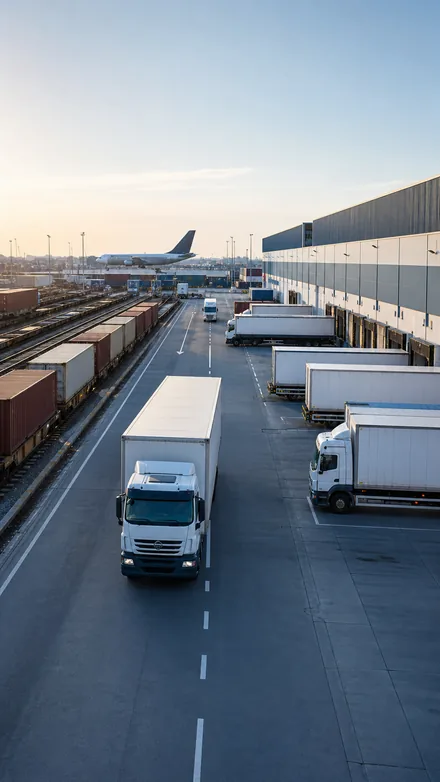
The transport and logistics sector has a dynamic structure that brings together many commercial players in the same process, from manufacturers to suppliers, from importers to exporters, and from port operators to road carriers. Delivering goods safely and on time from one point to another is not only an operational matter. Many legal elements, such as contracts of carriage, freight (navlun) relationships, storage, customs procedures, insurance, delivery terms and the carrier’s liability, are an inseparable part of logistics activities.
In Türkiye, carriage is assessed primarily under the Turkish Commercial Code (TTK), together with special legislation and international conventions. The carrier’s liability for loss (zıya) of and damage to the goods from the time they are taken over until delivery, and in certain circumstances for delay, should be assessed together with freight forwarding (taşıma işleri organizatörlüğü), storage and international carriage relationships.
For this reason, legal advice in the transport and logistics sector covers not only resolving disputes that have arisen but also building a contractual and operational structure that can prevent disputes from arising.
Drafting Transport and Logistics Contracts
In logistics activities, it is very important that the parties’ rights and obligations are clearly defined. Different liability regimes may apply depending on the nature of the legal relationship between the carrier, the sender (consignor), the freight forwarder, the warehouse operator, the sub-carrier or the receiving party.
In this context, the main contracts that may be subject to legal review are:
- Road carriage contracts
- Logistics service agreements
- International carriage contracts
- Freight contracts
- Storage and bonded warehouse (antrepo) agreements
- Freight forwarding agreements
- Fleet leasing and vehicle allocation agreements
- Distribution and supply agreements
- Sub-carrier agreements
- Agreements for loading and unloading services
In these contracts, provisions such as the carriage charge, delivery time, method of delivery, responsibility for loading and unloading, insurance obligations, delay, force majeure, limits of liability, contractual penalties, the governing law and the dispute resolution method should be assessed carefully.
International Transport and CMR Disputes
Because transport and logistics activities often involve more than one country, not only Turkish law but also international transport rules may apply.
In international road haulage in particular, the CMR Convention is one of the fundamental legal instruments of the logistics sector. Depending on the type of transport, international rules and conventions on rail, sea or air transport may also need to be assessed separately.
In international transport operations, the following issues often call for legal review:
- Issuing the transport document
- The carrier’s liability
- Damage to or loss of the cargo
- Short delivery
- Delay in delivery
- Non-payment of the carriage charge
- The sub-carrier’s liability
- Problems arising at border crossings
- Commercial disputes arising in foreign countries
In such disputes, it may be necessary to examine the contract terms together with the governing law, the competent court or arbitration arrangements and the international conventions.
Disputes Arising from Cargo Loss, Damage and Delay
One of the most significant areas of dispute in the logistics sector is the loss of, damage to or late delivery of the goods carried.
In such incidents, what matters is not only that a loss has occurred, but also factors such as at what stage the cargo was damaged, whether the packaging was suitable for transport, who carried out the loading and unloading, the entries in the transport documents, whether a report was drawn up at delivery and the scope of the insurance relationship.
The legal assessment may cover in particular compensation for cargo damage and loss, the carrier’s liability, recourse claims, disputes with insurance companies, receivables arising from carriage charges and losses caused by late delivery.
Sea, Road, Air and Multimodal Transport
The mode of transport used is important in determining which legal rules apply.
In maritime transport, freight contracts, the bill of lading (konşimento), loading and unloading operations and the carrier’s liability come to the fore; in road transport, contracts of carriage and, in international carriage, the CMR provisions may be more decisive. Different national and international rules may apply to air and rail transport.
Today, it is also very common for a single shipment to be delivered using more than one mode of transport, such as road, sea, rail or air. In such multimodal or combined transport processes, establishing at which stage of the transport the damage occurred can be critical for determining legal liability.
Storage, Bonded Warehouses and Supply Chain Processes
Logistics is not only about transport. The acceptance of goods into the warehouse, stocking, safekeeping, packing, preparation for dispatch and delivery can also create different legal responsibilities for the parties.
In storage and bonded warehouse relationships, the following issues are particularly important:
- Keeping the goods under suitable conditions
- Liability for damage and loss
- Stock discrepancies
- Delivery procedures
- Insurance provisions
- Warehouse service fees
- Termination of the contract
- Disputes arising from non-delivery of goods
It is also important to clearly define in the contract the tasks the freight forwarder or logistics service provider undertakes in organising the transport, selecting carriers, concluding the necessary contracts, packaging, insurance or customs clearance.
Customs and Cross-Border Trade Processes
For businesses that import and export, transport is usually carried out together with customs procedures. Incorrect or incomplete documents, disputes about the nature of the goods, delivery terms, or inconsistencies between commercial contracts and transport documents can disrupt the logistics operation.
For this reason, it is important to draft logistics contracts so that they are consistent with international sales contracts, delivery terms, customs obligations, insurance provisions and payment mechanisms.
In international commercial relationships, depending on the nature of the specific case, different legal sources such as the CISG, Incoterms, international sales contracts, transport documents and customs legislation may need to be assessed together.
Digitalisation and Technology Law in the Logistics Sector
Today, the transport and logistics sector is managed to a large extent through digital systems. The spread of vehicle tracking systems, electronic transport documents, fleet management software, warehouse automation systems, delivery platforms and data analytics applications brings new legal issues with it.
For this reason, IT law topics such as personal data protection, data security, electronic contracts, software service agreements, cybersecurity obligations and digital evidence are becoming important for logistics companies, not only traditional transport law.
In particular, the processing of location data of employees, drivers, customers or suppliers, the use of GPS and vehicle tracking systems, and delivery and recording processes carried out through mobile applications should be assessed separately in terms of personal data protection.
Contractual Risk Management for Logistics Companies
In the transport and logistics sector, a large share of significant legal risks may stem from contract terms that are inadequate or do not fit the business’s operating model.
In carriage, storage, supply, distribution and subcontractor relationships, defining the parties’ limits of liability from the outset and clearly regulating delivery, damage notification, insurance, force majeure and dispute resolution mechanisms can help manage commercial risks.
In addition, the fit between standard contracts and the business’s actual operations should be reviewed at regular intervals, and contracts should be updated when new transport models, digital systems, international operations or new supply chain structures are introduced.
Legal Advice in the Transport and Logistics Sector
Legal work in the transport and logistics sector should not be seen as a process that begins only after a lawsuit or dispute has arisen. Drafting contracts that fit the operating model, correctly defining areas of responsibility, reviewing transport documents and organising compliance processes can help identify many legal risks in advance.
Attorney Ezgi Çalışkan handles legal matters in the transport and logistics sector in connection with commercial law, contract law, international law and IT law.
The drafting and review of transport and logistics contracts, disputes under the CMR, claims for cargo loss and damage, carrier liability, freight and carriage receivables, storage relationships, international transport processes, insurance and recourse disputes, and commercial disputes arising from logistics activities are among the main legal issues that can be assessed in this context.