
Sectors
Energy
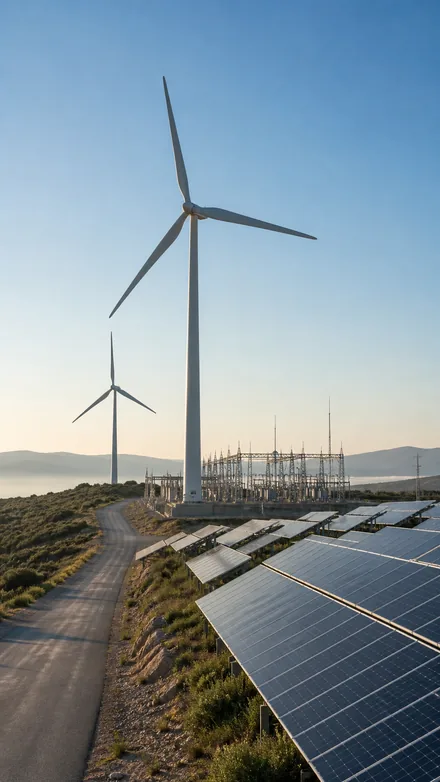
The energy sector is a highly regulated and capital-intensive sector covering a wide range of activities, from electricity generation and trading to the natural gas market, from renewable energy investments to storage systems, and from charging infrastructure to energy efficiency. In energy projects, legal processes are rarely limited to a single contract; investment, licensing, land use, financing, grid connection, supply, construction, operation, environmental obligations and long-term commercial relationships must be assessed together.
The legal needs of companies operating in the energy field can vary considerably depending on the type of project. The legal structure of a solar power plant is not the same as the legal risks of a natural gas supply agreement or an electricity storage investment. For this reason, legal work in the energy sector requires energy law, administrative law, commercial law, contract law, company law, environmental law, real estate law, finance law, competition law and international law to be considered together.
Energy Investments and the Electricity Market
Legal Structuring of Energy Investments
In energy projects, the legal review should run in parallel with the technical and financial feasibility of the investment. Which company will carry out the project, the relationship between the investors, the land to be used, the permit and licence processes, the energy sales model and the financing structure all directly affect the legal framework of the project.
In energy investments, the following in particular should be structured so that they are consistent with one another:
- Establishing the project company
- Investment and shareholders’ agreements
- Share transfers
- Financing agreements
- Land acquisition and rights of use
- Licence and permit processes
- Grid connection and system use relationships
- Energy sales and supply agreements
- EPC and operation and maintenance agreements
Especially in long-term energy investments, a small contractual error made at the start can have significant consequences that last from the financing of the project through to its operating period.
Legal Processes in the Electricity Market
In the electricity market, generation, transmission, distribution, supply and consumption relationships are subject to different legal rules. Before an electricity generation facility can start operating, licence, grid connection, system use and other administrative processes may need to be completed, depending on the investment model.
Legal work relating to the electricity market may involve topics such as:
- Generation activities
- Supply relationships
- Electricity sales agreements
- Connection agreements
- System use processes
- Balancing and market transactions
- Administrative decisions
- Commercial disputes between energy companies
Because energy trading is high-volume and continuous in nature, it is important that price, delivery, metering, payment, security, delay and force majeure provisions are set out clearly in the contracts.
Renewable Energy, Storage and Charging Infrastructure
Renewable Energy Projects
Investments in solar, wind, hydroelectric, biomass and other renewable energy sources make up a steadily growing part of the energy sector. The legal structure of these projects is not limited to the rules on electricity generation.
In renewable energy projects, the following should be assessed as a whole:
- The legal status of the project site
- Land use rights
- Zoning and environmental permits
- Connection capacity
- The financing model
- Equipment supply
- Construction and commissioning
- The energy sales model
In particular, in investments where the financial value of the project depends on the connection right, the generation capacity and long-term energy sales, the contracts must be consistent with the technical project.
Legal Structure of Solar Energy Projects
In solar energy investments, the legal status of the land, roof or other area used is one of the fundamental elements of the project. If the plant is to be built on immovable property belonging to a third party, models such as a lease, a right of superficies (üst hakkı), a right of use or similar arrangements may be considered.
In solar power plant (GES) projects, the following can be regulated in detail:
- Land or roof use agreements
- Panel and inverter supply
- EPC agreements
- Grid connection procedures
- Maintenance and performance warranties
- Liability for generation losses
- Insurance
- Energy sales agreements
Where panel performance falls below the expected level, inverters fail or installation is delayed, the technical performance criteria and the legal liability provisions need to be assessed together.
Wind Energy and Large-Scale Generation Projects
In wind energy projects, the plant site, turbine supply, infrastructure, grid connection, maintenance and long-term operating relationships are important legal topics.
Turbine supply agreements should set out in detail the technical performance, energy yield warranties, maintenance obligations, the supply of spare parts and long-term servicing.
In large-scale projects, technical failures that may lead to generation losses can have high financial consequences, so liability caps and performance warranties are of particular importance.
Energy Storage Systems
Electricity storage technologies are one of the fastest-developing areas of the energy market. Battery systems can be used together with generation facilities or under stand-alone commercial models.
In energy storage investments, issues such as the following are important from a contractual point of view:
- Battery supply agreements
- Capacity and performance warranties
- Battery life
- Degradation criteria
- Fire and safety risks
- Software systems
- Energy management systems
- Maintenance and replacement obligations
Because storage systems are largely managed by software and automation, energy law increasingly intersects with IT and technology law.
Electric Vehicles and Charging Infrastructure
With the growing use of electric vehicles, charging stations have become a separate area of activity within the energy sector. Different legal relationships can be established between charging network operators, station owners, property owners, technology providers and users.
In charging infrastructure projects, the following should be assessed from a legal point of view:
- Lease and use agreements for station sites
- Supply of charging units
- Software and platform agreements
- Payment systems
- User agreements
- Electricity supply
- Breakdowns and service interruptions
- Personal data processing
Because charging services are offered through mobile applications and involve the processing of payment details and user activity, they can also raise issues under the Law on the Protection of Personal Data No. 6698 (KVKK), electronic commerce law and IT law.
Energy Sales, Supply and PPA Agreements
Energy Sales and Supply Agreements
In the energy sector, long-term sales and supply agreements carry significant economic value. In electricity or natural gas purchase and sale relationships, how the price mechanism is determined, the delivery point, the payment terms and the security provisions directly affect the parties’ commercial risks.
In energy sales agreements, provisions such as the following in particular should be set out in detail:
- Term of the agreement
- Energy quantity
- Price and price adjustment formulas
- Payment and security
- Under-delivery or over-delivery
- Balancing obligations
- Force majeure
- Change in legislation
- Termination of the agreement
Corporate Power Purchase Agreements and PPA Structures
As companies increasingly choose to source energy from renewable sources over the long term, corporate power purchase agreements have become more important. These models, known internationally as PPAs, can establish a long-term commercial relationship between the energy producer and the consumer.
In these agreements, whether the energy price is fixed or variable, the generation risk, the delivery model, environmental attributes and the long-term financial effects of the agreement are of particular importance.
In PPA structures, elements such as the following should be dealt with together from both a legal and a financial perspective:
- Physical or financial delivery model
- Price mechanism
- Generation volume
- Generation shortfall
- Security structure
- Change in legislation
- Renewable energy certificates
The Natural Gas Market and Supply Relationships
In the natural gas market, import, wholesale, distribution, storage and supply to consumers can be the subject of different legal relationships. For industrial companies in particular, the uninterrupted supply of natural gas is critical for the continuity of production.
In natural gas agreements, issues such as quantity commitments, pricing, capacity, the delivery point and supply interruptions are of particular importance.
In long-term supply relationships, a significant change in market prices can upset the economic balance of the contract, so price adjustment and hardship mechanisms need to be set up correctly.
Plant Construction, Operation and Land Law
EPC Agreements and Construction of Energy Facilities
In many energy projects, engineering, equipment supply and construction activities can be brought together under the EPC (engineering, procurement and construction) model.
The EPC agreement should state clearly the technical criteria according to which, and the date by which, the contractor will deliver the facility.
In particular, the following provisions can directly affect the future revenue of the energy project:
- Project scope
- Technical specifications
- Construction schedule
- Commissioning
- Performance tests
- Delay penalties
- Generation performance
- Provisional and final acceptance
- Warranty
Operation and Maintenance Agreements
Energy facilities require regular maintenance and technical servicing throughout their economic life. Operation and maintenance agreements are critical for preserving the performance of the facility.
O&M agreements can regulate maintenance plans, response times, the supply of spare parts, remote monitoring, generation losses and performance criteria.
In particular, the agreement should state clearly who will be liable for the facility’s generation losses if a fault cannot be remedied for a long time.
Land and Real Estate Law in Energy Projects
Energy investments often require long-term use of land. Plant sites, transmission lines, energy storage areas and charging facilities can give rise to different property law relationships.
At the project development stage, the following should be examined:
- Title deed (tapu) records
- Zoning status
- Lease relationships
- Right of superficies
- Easements (irtifak hakları)
- Expropriation (kamulaştırma)
- Rights of way
- Encumbrances on the property (takyidat)
Because energy facilities are long-term investments, it is important to secure the right to use the land for a period consistent with the duration of the project.
Expropriation and Easements
In energy projects, transmission lines, pipelines or other infrastructure may need to cross immovable property belonging to third parties. In this case, expropriation or easement procedures may come into play.
The rights of the property owners, the expropriation compensation, the area of use required for the project and the administrative acts involved each require a separate legal assessment.
Environment, Efficiency and Carbon Markets
Environmental Law and Energy Projects
In energy investments, environmental impacts are an important part of the project’s legal structure. Depending on the size and nature of the project, environmental impact assessment, permits, waste management and other environmental obligations may come into play.
In energy projects, the following in particular should be assessed from a legal point of view:
- Environmental impact assessment (ÇED) processes
- Environmental permits
- Waste management
- Emissions
- Water use
- Protection of natural areas
- Environmental administrative sanctions
Energy Efficiency and Sustainability
Rising energy costs and environmental obligations have made energy efficiency a strategic issue for companies.
In energy performance contracts, efficiency investments and energy saving projects, how the amount of savings will be measured and the performance commitments of the investment provider are legally important.
Companies’ sustainability policies and energy consumption data are also becoming increasingly linked to financing, investment and corporate reporting processes.
Carbon Markets and the Green Transition
The transformation in the energy sector is not limited to generation technologies. Reducing carbon emissions, increasing the share of renewable sources and financing sustainable investments are creating new legal and commercial models.
Carbon credits, renewable energy certificates and the trading of environmental attributes can create rights that need to be regulated separately in contracts.
Determining who owns the environmental value of an energy project, independently of the electricity it generates, can become particularly important in long-term energy sales agreements.
Financing, Due Diligence and Competition
Energy Finance and Project Finance
Because energy investments require high initial capital, project finance is an important area of legal work. Financial institutions often provide financing based not only on the financial position of the investor company, but on the future revenues of the project.
For this reason, documents such as the following may come into play in the financing process:
- Loan agreements
- Share pledges
- Account pledges
- Assignments of revenue
- Assignment of project agreements
- Security packages
- Direct agreements
The review by financial institutions of the EPC, energy sales, land and operation agreements is important for the financial sustainability of the project.
Legal Due Diligence in Energy Projects
In the acquisition of energy facilities, company transfers or investment rounds, legal due diligence is one of the key elements of the investment decision.
In a legal review of an energy project, the following can be examined:
- Corporate documents
- Licences and permits
- Land rights
- Grid connection documents
- EPC and O&M agreements
- Energy sales agreements
- Financing documents
- Environmental obligations
- Pending disputes
In particular, it is important to identify before investing any contractual or administrative restrictions that may affect the expected generation and revenue of the project to be acquired.
Competition Law in the Energy Sector
In energy markets, relationships between producers, suppliers and other market players can be of particular importance from a competition law perspective.
Price coordination, market sharing, the exchange of commercially sensitive information with competitors, or the market conduct of dominant undertakings can be assessed under competition law.
Joint ventures, energy trading agreements and long-term exclusive supply agreements may also need to be reviewed from a competition law perspective.
Digitalisation, Cybersecurity and International Risks
Digitalisation and Smart Grids in the Energy Sector
Smart meters, remote monitoring systems, IoT devices and automated energy management systems are becoming increasingly common in energy infrastructure.
Because these systems generate large amounts of consumption and operating data, a new area is emerging where energy law and IT law intersect.
In smart energy systems, the following should also be structured from a legal point of view:
- Data ownership
- Protection of personal data
- System access rights
- Software licences
- Data sharing with third parties
- Cybersecurity
Cybersecurity in Energy Infrastructure
Electricity generation facilities and energy infrastructure may be classed as critical systems. A cyber attack on digital control systems can lead not only to loss of information, but also to a halt in physical generation or damage to infrastructure.
For this reason, in energy companies cybersecurity should be assessed not only in terms of technical security measures, but also in terms of contractual liability, service provider management, incident notification and data security.
In agreements with technology companies that have remote access to energy automation systems, it is important that access rights, security standards and liability in the event of an attack are set out clearly.
Force Majeure and Change-in-Law Risks
Because energy projects are long-term, legislation, market prices and technical conditions can change significantly during the economic life of the investment.
War, natural disasters, energy supply crises, import restrictions or large-scale system failures can trigger force majeure provisions.
In addition, changes in legislation can directly affect the financial balance of the project. For this reason, long-term energy agreements should clearly state how “change in law” and economic balance mechanisms will be applied.
International Energy Investments and Cross-Border Agreements
Foreign investors, international technology companies, equipment manufacturers and financial institutions are frequently involved in energy projects. For this reason, energy investments have a significant international law dimension.
In international energy agreements, issues such as the following are important:
- Governing law
- Arbitration
- Currency and payment mechanisms
- International sanctions
- Import and export restrictions
- Foreign investment protection
Energy Disputes and Arbitration
Energy disputes are usually based on technical, high-value and long-term contracts. Failure to complete the facility on time, generation capacity not reaching the expected level, non-payment of energy sales prices or failure to perform supply obligations can lead to significant disputes.
In such disputes, technical reports, generation data, market records, performance tests and project correspondence should be assessed together with the contracts.
Depending on the nature of the dispute, negotiation, mediation, litigation, or national and international arbitration may be used.
Scope of Legal Work in the Energy Field
In the energy sector, legal work does not end with completing a licensing procedure or drafting a contract. New legal risks can arise at different stages of the project, from the investment decision to financing, from plant construction to energy sales, and through the technological changes of the operating period.
As Attorney Ezgi Çalışkan, I approach legal work in the energy field with the commercial and technical structure of the project in mind, focusing on energy investments, renewable energy projects, EPC and O&M agreements, energy purchase and sale relationships, energy storage, charging infrastructure, project finance, environmental obligations, land rights, digital energy systems and energy disputes. Because the energy market is constantly being transformed by regulation, technology and finance, I believe the legal structure should be designed to fit the entire life cycle of the project.