
Sectors
Agriculture and Food
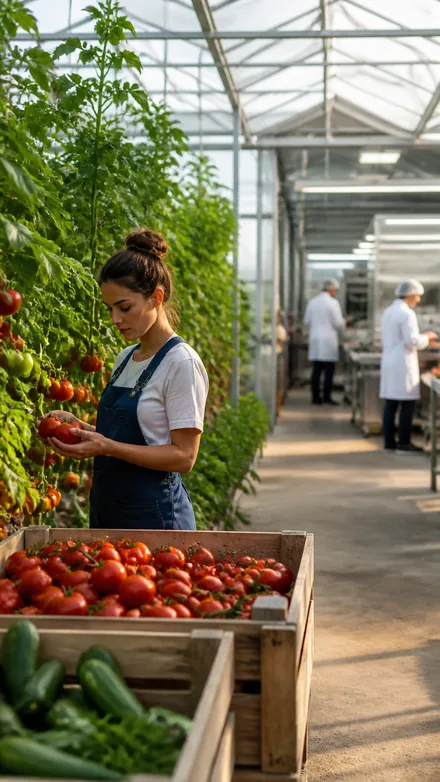
The agriculture and food sector has a broad supply chain that extends from production to processing, from storage to transport, and from packaging to retail sale. Agricultural producers, food manufacturers, importers and exporters, distributors, supermarket chains, restaurants, technology providers and logistics businesses may each bear legal responsibility at different stages of the same product.
Because of this structure, the legal needs of the agriculture and food sector are not limited to placing a product on the market. Setting up a production facility, sourcing raw materials, contract farming, preparing product labels, protecting trademark and packaging rights, advertising, product safety, recall procedures, export transactions and consumer disputes can all bring different areas of law into play.
In legal matters in agriculture and food, food law, agricultural law, commercial law, contract law, consumer law, intellectual property law, competition law, employment law, personal data protection and international trade law often need to be assessed together.
Food Legislation, Labelling and Advertising
Compliance with Food Legislation and Product Safety
For businesses operating in the food sector, one of the most fundamental legal issues is that products are produced and placed on the market in a way that is safe for human health and complies with the requirements of the legislation. Throughout the process from the production of food until it reaches the final consumer, businesses may have various obligations relating to registration, permits, hygiene, traceability and consumer information.
In Türkiye, regarding food safety and official controls, the Law No. 5996 on Veterinary Services, Plant Health, Food and Feed in particular, together with the regulations issued under the Turkish Food Codex (Türk Gıda Kodeksi) and the related secondary legislation, are important.
Depending on a food business’s operating model, a legal review may cover issues such as:
- Compliance of production and operating processes with the legislation
- Product composition and content criteria
- Hygiene and production standards
- Traceability of products
- Official control procedures
- Administrative sanctions
- Withdrawal of the product from the market or recall
- Allocation of responsibilities in the supply chain
Addressing legal risks in food safety only from the point of view of the manufacturing company may not be sufficient. Importers, distributors, retailers or businesses selling products under their own brand may also bear responsibility, depending on how the product is placed on the market.
Food Labels and Consumer Information
The label of a food product is one of the most important elements of the legal relationship with the consumer. Depending on the nature of the product, the information that must appear on the label may include the name of the product, its ingredients, allergens, net quantity, storage conditions, the use-by date or the date of minimum durability and details of the food business operator.
It is important not only that the statements on the label are accurate, but also that they are not misleading to the consumer. Presenting a product as having a feature it does not have, creating a false impression about its content, or using images and statements that may mislead the consumer about the nature of the product can create legal risk.
In particular, statements that may influence the consumer’s purchasing decision, such as:
- “Natural”
- “Organic”
- “Sugar-free”
- “No added sugar”
- “Gluten-free”
- “Source of protein”
- Nutrition and health claims
- Statements of origin and place of production
need to be assessed under the relevant legislation.
Before a new product is launched, a legal check of the label, packaging, product name and commercial statements used may be important to prevent administrative sanctions or consumer disputes that could arise later.
Food Advertising, Health Claims and Digital Marketing
The advertising language used to promote food products is subject to legal rules that go beyond ordinary brand communication. Statements about the effects of a product on human health should be assessed carefully, especially with regard to health and nutrition claims.
Statements used on television, websites, social media, in influencer collaborations and in digital advertising campaigns must not mislead consumers and must not promise results about the product that cannot be proven.
For example, creating the impression that a food treats or prevents a particular disease or produces a medical result may cause significant problems, depending on the legal classification of the product.
In the marketing processes of food companies, consumer law, advertising legislation, rules on health claims and social media advertising rules should be assessed together.
Production and Supply Contracts
Contract Farming in the Agriculture and Food Sector
In agricultural production, it is becoming increasingly common for the relationship between the producer and the buying company to be regulated in advance by contract. In contract farming (sözleşmeli üretim) models, the type and quantity of the product to be grown, quality standards, the delivery date, the pricing method and the inputs to be used in production directly affect the parties’ obligations.
In such contracts, issues such as the following should be clearly regulated in particular:
- Production quantity and quality criteria
- Supply of seeds, seedlings, fertiliser or other inputs
- Production methods
- Right of inspection
- Harvest and delivery conditions
- Method of determining the price
- Circumstances in which the product may be rejected
- Force majeure
- Drought, frost, floods and other agricultural risks
- Termination of the contract
Because agricultural production depends on natural conditions, the clauses used in ordinary commercial contracts may not always be sufficient. How situations such as crop loss, reduced yields or natural disasters will affect the allocation of risk between the parties should be addressed separately.
Raw Material, Supply and Manufacturing Contracts
Food manufacturers may work with many suppliers of raw materials and auxiliary materials. Agricultural products, packaging materials, additives, flavourings and other inputs can directly affect the quality of the final product.
Supply contracts should clearly regulate not only the price and delivery date but also the technical specifications of the product and its compliance with food legislation.
If the raw material does not have the required quality or does not comply with the legislation, the consequences may include production losses, product recalls, claims from third parties and damage to the brand’s reputation. For this reason, it is important to define the limits of the supplier’s liability in the contract.
Own-Brand Manufacturing and Private Label Agreements
In the food sector, private label models, in which a manufacturer produces goods under another company’s brand, are very common. In these relationships, the manufacturer of the product and the owner of the brand are different persons, so legal responsibilities need to be clearly allocated by contract.
In private label manufacturing agreements, matters such as:
- Product recipe
- Quality standards
- Use of the brand and packaging
- Production quantity
- Confidentiality
- Product inspections
- Defective production
- Recall costs
- Handling of consumer claims
- Intellectual property rights
are particularly important.
Determining whether a problem with a product results from a manufacturing defect or from an incorrect label or instruction provided by the brand owner can directly affect the parties’ financial liability.
Recalls, Product Liability and Logistics
Product Recall and Crisis Management
If it is found that a product posing a food safety risk is on the market, action must be taken quickly and lawfully. It may be necessary to identify which batches of the product are affected, examine the distribution chain and, where required, withdraw the product from the market or recall it from consumers.
A recall is not merely an operational task. Legal processes such as communication with the competent authorities, informing consumers, coordination with distributors and retailers, notification to insurance companies and recourse against the supplier also need to be managed together.
For this reason, it is important for food businesses to establish product recall procedures, a chain of responsibility and internal communication mechanisms before a crisis arises.
Product Liability and Consumer Claims
If a food product placed on the market is defective or causes harm to a consumer, different types of legal liability may arise.
In a dispute concerning a product, production records, analysis results, the batch number, supply chain documents, storage conditions and the stages the product went through before reaching the consumer may be important.
Especially for perishable products, determining at which stage the damage occurred (production, transport, cold chain, storage or retail) is important for establishing liability.
Cold Chain, Storage and Food Logistics
For meat, dairy products, frozen foods, seafood, fresh fruit and vegetables and similar products, transport and storage conditions are a direct part of product safety.
A break in the cold chain may cause the product to lose its commercial value or create a risk to consumer health. In that case, liability between the carrier, the warehouse operator, the manufacturer or the distributor needs to be determined on the basis of the contracts and the specific facts.
In food logistics, it is important for contracts to clearly regulate transport temperatures, delivery procedures, data records, the operation of refrigeration systems, insurance and mechanisms for establishing damage.
Trademarks, Agricultural Technology and Digital Sales
Protection of Trademarks, Packaging and Geographical Indications
In the food sector, a large part of consumer preference is shaped by the brand and the product packaging. For this reason, trademarks, logos, product names and original packaging designs can be valuable intellectual property assets for businesses.
Before a new product is launched, it is important to assess whether the trademark to be used conflicts with the rights of third parties and to carry out the necessary trademark registration procedures.
Another important intellectual property area in the agriculture and food sector is geographical indications (coğrafi işaretler) and traditional product names. Protecting agricultural or gastronomic products associated with a particular region matters both for producers and for regional economic value.
Agricultural Technology and AgriTech
The agricultural sector is no longer limited to traditional production methods. Smart irrigation systems, agricultural sensors, drone technology, satellite data, AI-assisted crop forecasting and automated farm machinery are accelerating the sector’s digital transformation.
In AgriTech projects, new legal questions may arise, such as contracts between the technology company and the producer, software licences, ownership of devices, who may use the data generated and liability for system errors.
For example, if an artificial intelligence system gives incorrect advice on irrigation or spraying and crops are lost as a result, the liability relationship between the company that developed the technology, the business using the system and the producer may need to be assessed under the terms of the contract.
Agricultural Data and Personal Data Protection
Digital farming applications can generate a significant amount of data about farmers, employees and businesses. Field locations, production volumes, device data, employee information and commercial production data may fall into different legal categories.
Where information that qualifies as personal data is processed, legal obligations arise under the Law on the Protection of Personal Data No. 6698 (KVKK); for production and business data that is not personal data, trade secret protection and contractual confidentiality clauses may become important.
E-Commerce in the Agriculture and Food Sector
The online sale of food products is a fast-growing business model. Producers reaching consumers directly through their own websites, mobile applications, online grocery stores and electronic marketplaces gives rise to new legal processes.
In e-commerce activities, presenting product information accurately, stating price and delivery conditions, consumer information requirements, personal data protection and procedures for commercial electronic messages are important.
For perishable food products or those with a short shelf life, delivery arrangements and the application of the right of withdrawal (cayma hakkı) should be assessed separately according to the nature of the product.
Foreign Trade, Competition and Employment Law
Food Imports, Exports and International Trade
International trade in agricultural and food products requires legal review not only in terms of product safety but also in terms of customs, transport, payment and international sales contracts.
Export contracts should clearly set out product specifications, quality standards, delivery terms, the payment method, responsibility for transport, insurance, the product requirements of the importing country and the dispute resolution method.
In international sales, depending on the nature of the specific relationship, the CISG, Incoterms, letter of credit practice, international carriage rules and the food legislation of foreign countries may also come into play.
Especially for fresh fruit and vegetables and food products with a short shelf life, even a small delay in delivery can lead to significant economic losses, so transport and delivery clauses should be regulated in more detail.
Competition Law in the Agriculture and Food Sector
In the agriculture and food sector, relationships between producers, suppliers, distributors and retailers may also have consequences that need to be assessed under competition law.
Jointly setting prices, sharing territories or customers, interfering with resale prices, or agreements that may affect the competitive structure of the market can create legal risk.
When exclusivity, non-compete obligations and sales conditions are drafted in distribution and dealership agreements, both the parties’ commercial expectations and the limits of competition law should be taken into account.
Employment Law in Agriculture and Food Businesses
The agriculture and food sector is one of the areas with a high level of employment. Seasonal work in agricultural production, shift systems in factories, packaging facilities and logistics operations can give rise to different employment law relationships.
Employment contracts, working hours, overtime, occupational health and safety, seasonal work models, termination of employment contracts and employee receivables may be among the important issues for the sector.
In businesses where hygiene standards are critical, such as food production, it is also important that internal procedures and workplace rules for employees are aligned with the technical requirements of the sector.
Resolving Disputes in the Agriculture and Food Sector
Disputes arising in the sector often require technical examination because of the nature of the product and its position in the supply chain. Defective raw materials, production that does not meet quality standards, late delivery, product loss, trademark infringement or the termination of a distribution relationship can give rise to different types of dispute.
In such cases, contracts, laboratory analyses, quality control reports, production and batch records, shipping documents, electronic correspondence and other commercial documents may be important in the legal assessment of the dispute.
Depending on the nature of the specific case, negotiation, mediation, arbitration or litigation may be considered as methods of resolution.
Legal Advice in the Agriculture and Food Sector
Legal risk management in the agriculture and food sector is not a process that begins after the product reaches the consumer. Every stage, from the production plan to the raw material contract, from packaging design to label wording, and from the distribution model to the digital sales channel, can have a different legal consequence.
Attorney Ezgi Çalışkan assesses legal matters in the agriculture and food sector in connection with food and agricultural legislation, contract law, commercial law, consumer law, intellectual property law, IT and technology law, competition law and international trade law.
Compliance of food businesses with the legislation, production and supply contracts, own-brand manufacturing, product labels, advertising and health claims, recall procedures, food logistics, AgriTech applications, trademarks and geographical indications, e-commerce and international food trade are among the main legal issues that can be addressed in this context.
Today, as agriculture becomes increasingly integrated with technology and food with global supply chains, a sustainable commercial structure requires not only product quality but also a solid legal framework that extends from production to the consumer.