
Sectors
Automotive
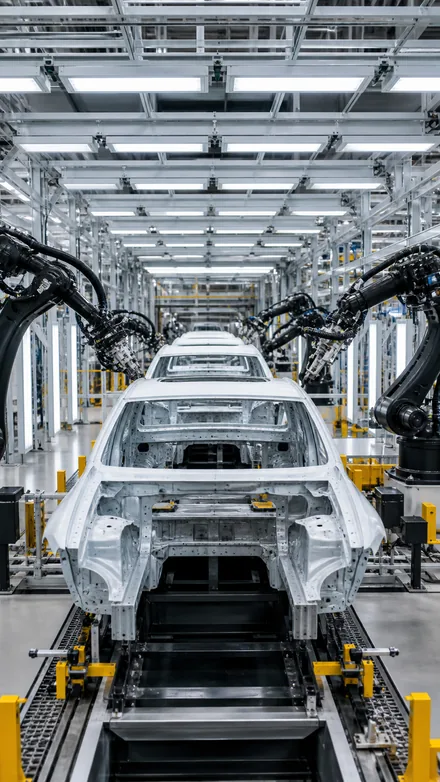
The automotive sector is a technology-intensive sector in which multi-layered legal relationships are formed between vehicle manufacturers, automotive suppliers, distributors, dealers, service networks, fleet operators, finance providers, software providers and end users. The transformation of traditional vehicle production through electric vehicles, connected cars, autonomous driving systems, battery technologies and digital services has also considerably widened the scope of automotive law.
For this reason, legal needs in the automotive field are not limited to vehicle sales or disputes over defective vehicles. Production and supply chain contracts, distribution and dealership systems, warranty and service relationships, product safety, recall processes, intellectual property, software licences, personal data protection, competition law, fleet leasing, financing models and international trade must all be considered together within the same sector.
Legal work in the automotive sector requires a specific structure in which different fields are linked, such as commercial law, contract law, consumer law, product liability, competition law, intellectual property law, personal data protection, IT and technology law, employment law, insurance law and international trade law.
Production, Supply and Distribution Networks
Vehicle Manufacturers and Automotive Supplier Contracts
Automotive production relies on a complex production chain in which a large number of parts are sourced from different suppliers. Each component, such as the engine, electronic control unit, braking system, seats, wiring harness, plastic parts, software or sensors, can affect the safety and performance of the final vehicle.
Contracts between the main manufacturer and supplier companies should therefore regulate in detail not only the price and delivery quantities of the products but also technical standards and responsibility for quality.
In automotive supply contracts, the following in particular can be addressed in detail:
- Technical specifications
- Product quality standards
- Sampling and approval processes
- Production capacity
- Delivery schedules
- Quality control mechanisms
- Warranty obligations
- Product recall costs
- Losses caused by a production line stoppage
- The supplier’s own sub-suppliers
In particular, if a defective part is used in thousands of vehicles, the resulting loss may not be limited to the price of that part. Service operations, vehicle recalls, production stoppages and third-party claims can have significant economic consequences.
Long-Term Supply and Continuity of Production
In the automotive sector, uninterrupted operation of production lines is critical. Even a single part not being delivered on time can disrupt the production plan.
For this reason, in long-term supply relationships, increases in raw material prices, exchange rate movements, logistics problems and disruptions in global supply chains should also be addressed contractually, in addition to delivery times.
Price revision mechanisms, the right to alternative sourcing, minimum stock obligations, capacity commitments and procedures to be applied in extraordinary circumstances are important for continuity of production.
Distribution and Vehicle Imports
Foreign automotive brands may operate in the Turkish market through distribution models. A distributor may take on extensive obligations with regard to vehicle imports, the sales network, use of the brand, warranty services and after-sales organisation.
Distribution agreements should clearly regulate matters such as:
- Geographical territory
- Sales targets
- Vehicle ordering and delivery system
- Use of the brand
- Advertising standards
- Warranty processes
- Supply of spare parts
- Setting up a service network
- Termination of the agreement
In distribution relationships, the consequences that commercial terms set by the manufacturer may have under competition law should also be taken into account separately.
Authorised Dealerships and Sales Networks
Dealer networks play an important role in bringing the automotive sector to the end user. Authorised dealers may offer vehicle sales, delivery, finance referrals, insurance services and, in some cases, servicing under the same commercial structure.
Dealership agreements may regulate showroom standards, sales targets, vehicle allocation, brand usage rules, campaigns, stock obligations and customer experience standards.
The agreement should also determine in advance how existing vehicle stock, customer orders, brand signage, demonstration vehicles and warranty work will be handled if the relationship between the dealer and the distributor ends.
Authorised Service and After-Sales Services
The service relationship that begins after a vehicle is sold creates a long-term legal bond in the automotive sector. Periodic maintenance, warranty work, replacement of spare parts and technical repairs can give rise to both consumer law and commercial liability.
Authorised service agreements need to regulate clearly areas such as:
- Service standards
- Technical training obligations
- Use of original spare parts
- Warranty work
- Management of customer records
- Service pricing
- Liability for technical faults and damage
Sales, Warranty and Product Liability
Defective Vehicles and Consumer Disputes
In sales of new or used vehicles, claims of defective goods (ayıplı mal) may arise if the vehicle does not have the promised features, if recurring technical faults appear, or if certain parts do not perform their function.
In such disputes, it is necessary to assess not only whether a fault exists, but also its nature, its effect on safe use, the repair history and whether it existed before the vehicle was delivered to the consumer.
The main issues that may be the subject of a dispute are:
- Engine and gearbox faults
- Problems with electronic systems
- Recurring faults after servicing
- Bodywork and paint disputes
- Damage or a repair history on a new vehicle
- Battery capacity problems
- Differences in equipment and trim packages
- Incorrect or incomplete information at the point of sale
Vehicle Delivery and Order Contracts
Especially in periods of high demand, there may be long periods between ordering a vehicle and its actual delivery. The order price, the deposit, the model and equipment of the vehicle, the delivery date and price changes can lead to disputes during this period.
Vehicle sales and pre-order contracts should clearly state at what stage the price becomes final, which provisions will apply if delivery is delayed and what will happen if the customer cancels the order.
Legal Management of Warranty Processes
Vehicle warranties can create multiple liability relationships between the manufacturer, the distributor, the dealer and the service provider. If a fault covered by the warranty cannot be fixed by the service provider, or the same fault keeps recurring, this can turn into a consumer dispute.
Warranty policies need to be clear, workable and consistent with technical service operations. It is also important to explain correctly to the consumer which situations are excluded from the warranty.
Product Safety and Vehicle Recalls
If a systematic problem affecting safety is identified in a vehicle model or a specific production series, a recall process may become necessary. The problem may originate from the brakes, airbags, steering system, battery, software or another critical component.
In the recall process, legal and operational matters such as the following must be managed together:
- Identifying the affected vehicles
- Procedures to be carried out with the competent authorities
- Informing vehicle owners
- Planning the service operation
- Supply of parts
- Sharing costs along the supply chain
- Assessing third-party damage
Product Liability and Vehicle-Related Damage
If a safety defect in a vehicle or vehicle part causes a traffic accident, a fire or other damage, product liability may come into play.
In these disputes, different types of defect may be assessed, such as design defects, manufacturing defects, software problems or inadequate user information.
The liability of the vehicle manufacturer, the parts manufacturer, the importer and other economic operators must be examined separately according to the nature of the incident.
Electric, Connected and Autonomous Vehicles
Electric Vehicles and New Legal Risks
The spread of electric vehicles is changing the contractual and technological structure of the automotive sector. In electric vehicles, the battery, charging system, energy software and connected services can make up a significant part of the vehicle’s economic value.
For electric vehicles in particular, the following may raise new contractual and consumer law issues:
- Battery warranty
- Loss of battery capacity
- Charging performance
- Battery replacement
- Battery leasing models
- Software updates
- Compatibility with charging infrastructure
Battery Supply, Service Life and Recycling
Electric vehicle batteries have a high economic value and are also of particular environmental importance. Different parties may take on responsibility from the production of a battery to the end of its service life.
In battery supply contracts, it is important to define capacity, charge cycles, performance degradation and warranty limits in measurable terms.
The reuse or recycling of batteries that have reached the end of their service life should also be assessed separately in terms of environmental law, waste management and product liability.
Charging Stations and the Link Between Automotive and Energy
The electric vehicle ecosystem has brought the automotive sector directly together with the energy sector. When vehicle manufacturers or fleet companies develop their own charging networks, the charging service, energy supply, software and user relationships are run together.
In contracts relating to charging infrastructure, station use, pricing, the mobile app, payment systems, technical faults and data sharing are legally important.
Connected Vehicles and Vehicle Data
New-generation cars are turning into digital platforms that constantly generate data. A vehicle’s location, driving style, speed, maintenance status, technical fault records and the driver’s interaction with in-car systems can be recorded digitally.
It is important to determine which part of this data is personal data, which data the manufacturer may process, and the legal conditions for sharing the data with service providers, insurance companies or technology providers.
In connected vehicle systems, the following in particular should be assessed in terms of the Law on the Protection of Personal Data No. 6698 (KVKK) and data security:
- Location data
- Driver profiles
- Telematics records
- Remote vehicle access
- Mobile app data
- Service and maintenance records
Autonomous and Driver Assistance Systems
Advanced driver assistance systems and autonomous driving technologies are changing the traditional understanding of fault and liability in automotive law. Determining whether an accident was caused by driver error, a sensor failure, the software or an algorithmic decision is becoming increasingly technical.
With these systems, the following may be assessed together:
- Liability of the vehicle manufacturer
- Liability of the software developer
- Liability of sensor and parts manufacturers
- The driver’s duty to intervene
- The effect of software updates
Automotive Software and OTA Updates
The fact that important vehicle functions are managed by software has brought the automotive sector directly together with IT law. Engine management, battery control, navigation, driver assistance systems and multimedia features can be changed through remote software updates.
With remote updates, known as OTA (over-the-air) updates, a failed update, a change to a particular vehicle feature or the disabling of an existing function can cause problems under consumer and contract law.
The scope of software licences, the period during which updates will be provided and which digital services will continue throughout the vehicle’s service life should be clearly defined from the point of sale onwards.
In-Car Digital Services and Subscription Models
Car manufacturers may offer certain vehicle features through a subscription or digital purchase model. Navigation, connected services, remote control functions or certain driving features may be priced as separate digital services.
In these models, enabling or disabling through software a feature that is physically present in the vehicle creates new legal relationships in terms of consumer information, subscription contracts and the continuity of digital services.
Data, Cybersecurity and Artificial Intelligence in the Automotive Sector
Cybersecurity in Vehicles
Because connected vehicles communicate with the internet and mobile apps, cybersecurity has become part of vehicle safety. Unauthorised access can lead not only to the disclosure of personal data but also to certain vehicle functions being affected.
In contracts between automotive companies and technology providers, the following should be clearly regulated:
- Cybersecurity standards
- Vulnerability notifications
- Software updates
- Incident response
- Data security
- Allocation of liability
Artificial Intelligence and Automotive Technologies
Artificial intelligence is used not only in autonomous driving systems but also in many automotive applications, such as production quality control, fault prediction, customer service, vehicle pricing and used-vehicle valuation.
The source of the data used in AI systems, the effect of automated decisions and the determination of liability if an algorithm produces an incorrect result are creating new areas of legal work.
Personal Data Protection in Vehicle Sales
Distributors, dealers and service providers may process customers’ identity, contact, vehicle, payment and service history data. The volume of this data is growing even further with mobile apps and connected vehicle services.
Under the KVKK, automotive companies must clearly determine for which purposes customer data is processed and how it is shared between the manufacturer, the dealer, the service provider, the insurance company or the technology provider.
Used Vehicles, Leasing, Financing and Insurance
Used Vehicle Trade
The used vehicle market carries additional legal risk because of the vehicle’s history and actual technical condition. Damage history, mileage, replaced parts, records of severe damage and technical defects can directly affect the decision to buy.
Providing incorrect or incomplete information before the sale may lead to liability for defective goods, contractual liability or other legal consequences depending on the specific facts.
Vehicle Inspection Services and Inspection Liability
In used vehicle sales, pre-purchase vehicle inspection (ekspertiz) reports play an important role in the parties’ decisions. If the mechanical, electronic or bodywork condition of the vehicle is assessed incorrectly, the liability of the business providing the inspection service may arise.
In the event of a dispute, the scope of the inspection report, the test methods used and the limitations stated in the report are important.
Vehicle Rental and Fleet Management
Short-term and long-term vehicle rental and operational fleet management are among the important business models of the automotive sector.
Fleet and rental agreements should regulate in detail provisions such as:
- Rental period
- Mileage limit
- Maintenance obligations
- Damage to vehicles
- Insurance
- Tyre and service arrangements
- Early termination
- Assessment of damage when the vehicle is returned
Vehicle Financing and Business Models
Loans, financial leasing or other financing models may be used to purchase vehicles. Especially for commercial fleets, the financing structure needs to be assessed together with vehicle ownership, insurance and security arrangements.
In financing contracts, provisions such as default, early repayment, security and repossession of the vehicle can directly affect the economic risks of the parties.
Motor Insurance and Damage Claims
Compulsory motor third-party liability insurance (trafik sigortası) and comprehensive motor insurance (kasko) form the direct link between the automotive sector and insurance law. Vehicle damage, total loss assessments, loss of value, repair costs and replacement vehicle claims can be the subject of various disputes.
In damage files, accident reports, loss adjuster reports, service records and policy terms should be examined together.
Trademarks, Competition, Employment Law and Trade Secrets
Automotive Brands and Intellectual Property
Vehicle brands, logos, model names, designs, technical solutions and software are important intellectual property assets of automotive companies.
In this area, the main headings of legal protection may include:
- Trademark registration
- Design rights
- Patents and technical inventions
- Software rights
- Licence agreements
- Counterfeit spare parts
Counterfeit and Non-Standard Spare Parts
In the automotive sector, counterfeit spare parts, or parts that do not comply with technical standards, can affect both trademark rights and vehicle safety.
The use of counterfeit products, particularly for brakes, suspension, airbags and other safety parts, can create serious risks of harm. For this reason, trademark infringement and product safety processes may be pursued together.
Competition Law and Automotive Distribution Systems
Vertical relationships between the manufacturer, distributor, dealer and service provider are one of the main areas in which competition law applies in the automotive sector.
In particular, the following may require assessment under competition law:
- Setting resale prices
- Territorial sales restrictions
- Restrictions on online sales
- Conditions for the authorised service network
- Supply of spare parts
- Exclusivity clauses
Employment Law in the Automotive Sector
Vehicle production plants, dealers and service businesses have large workforces. Production workers, engineers, sales staff and technical service teams may be subject to different working arrangements.
Shift work, overtime, performance and bonus systems, occupational health and safety, and employees’ access to trade secrets are among the important employment law issues in the sector.
Protecting Production Information and Trade Secrets
In the automotive sector, technical drawings, prototypes, production methods, new vehicle projects, software code, parts prices and supplier information can have high commercial value.
It is important to put confidentiality and information security provisions in place when this information is shared with employees, engineering firms and suppliers.
In new vehicle projects, determining the intellectual property and confidentiality structure between the parties before development begins can reduce disputes over ownership of rights that may arise later.
International Trade, Supply Risks and Corporate Transactions
International Automotive Trade
The automotive sector depends on global supply chains. Vehicles and parts may be manufactured in one country and assembled or sold in others.
In international automotive contracts, elements such as the following are important:
- Delivery terms
- Customs procedures
- Rules of origin
- Transport and insurance
- Payment methods
- Currency risk
- Governing law
- Arbitration and dispute resolution
Supply Chain Disruptions and Force Majeure
The chip crisis, logistics disruptions, natural disasters, wars or international trade restrictions can directly affect automotive production.
For this reason, it is important that long-term automotive contracts clearly regulate force majeure (mücbir sebep), hardship and alternative sourcing mechanisms.
The contract may determine whether the main manufacturer has the right to source parts elsewhere if a supplier stops production, and who will bear the resulting additional costs.
Mergers, Acquisitions and Legal Review in Automotive Companies
Carrying out legal due diligence before acquiring vehicle manufacturers, automotive suppliers, dealers or technology start-ups makes it possible to identify investment risks.
The review may cover:
- Company and shareholding structure
- Key customer and supplier contracts
- Distribution and dealership rights
- Intellectual property assets
- Product liability risks
- Obligations towards employees
- KVKK and data processes
- Ongoing disputes
Resolving Automotive Disputes
Disputes in the automotive sector can arise across a wide range, from consumer transactions to very high-value commercial supply disputes.
In technical disputes, in addition to the contracts, service records, quality control reports, production data, vehicle electronic records, vehicle inspection reports and examinations by court-appointed experts (bilirkişi) can play an important role.
Depending on the parties and the nature of the dispute, the consumer arbitration committee (tüketici hakem heyeti), mediation, the courts, or national and international arbitration may be relevant.
Scope of Legal Work in the Automotive Sector
Legal needs in the automotive sector begin long before a vehicle enters the production line and continue throughout its service life. Selecting suppliers, preparing technical contracts, setting up the sales and distribution network, delivering the vehicle to the consumer, warranty and service processes, connected services and product safety are different stages of the same legal chain.
As Attorney Ezgi Çalışkan, I approach legal work in the automotive sector within the sector’s changing structure: from production and supply relationships to distribution and dealership systems; from consumer matters and product liability to electric and connected vehicle technologies; and from KVKK, cybersecurity, artificial intelligence and international trade to the resolution of technical disputes. Because the car is no longer just a mechanical product but a technology platform that generates software, data, energy use and continuous digital services, my approach is to handle automotive law within a multidisciplinary framework that keeps pace with this transformation.