
Sectors
Mining
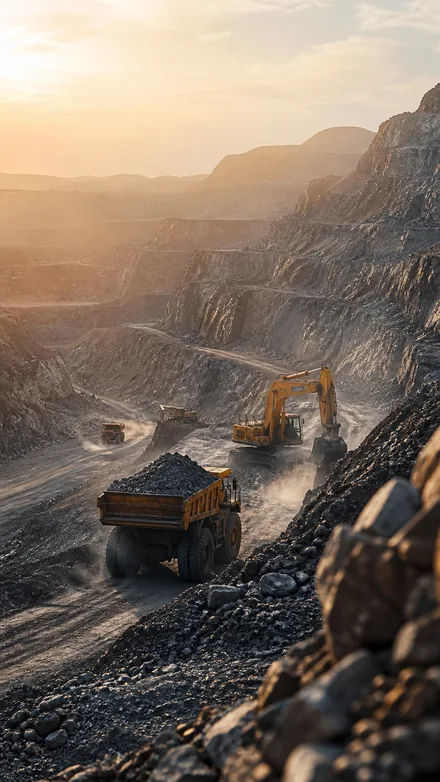
The mining sector is a specialised field of activity in which many legal processes run at the same time: from exploration to licensing, from the operating period to ore sales, and from environmental obligations to expropriation and land use. Because mining investments require large amounts of capital, are planned over the long term and involve a continuous administrative relationship with public authorities, legal risk management is critical for the sector.
A legal assessment of a mining project cannot be made simply by checking whether a licence exists. The scope and term of the licence, the limits of the operating right, access to the land, environmental permits, the use of forest or pasture land, infrastructure rights, occupational health and safety, financing of the mine site, operating contracts and the sales model for the extracted mineral must all be considered together.
For this reason, legal work in the mining sector is directly connected with mining law, administrative law, environmental law, real estate law, contract law, commercial law, company law, employment law, occupational health and safety, energy law, expropriation law and international investment law.
Mining Licences, Exploration and Site Use
Mining Licences and Administrative Procedures
Licensing and permit processes form the legal basis of mining activities. Different administrative obligations under the relevant legislation may need to be met at the exploration, operation and production stages.
In the mining licence (maden ruhsatı) process, the following points are of particular legal importance:
- Licence applications
- Licence terms
- Scope of the licence
- Boundaries of the licence area
- Operational obligations
- Transfer of the licence
- Cancellation or expiry of the licence
- Administrative sanctions
Since administrative acts relating to a mining licence can affect the entire investment, deadlines, application obligations and the operating conditions attached to the licence must be monitored carefully.
Exploration Activities and Exploration-Phase Contracts
Before a mining investment moves into production, the nature, quantity and economic value of the reserve must be determined. During this process, drilling, geological surveys, sampling, laboratory analysis and technical consultancy services may be procured.
Contracts for exploration activities should clearly set out the following:
- The technical scope of the work
- Drilling and sampling standards
- Reporting obligations
- Ownership of geological data
- Confidentiality
- Liability for the accuracy of technical results
- Occupational health and safety obligations
Because the geological data, reserve reports and technical analyses produced by exploration can directly affect the commercial value of the investment, it should also be determined separately who may use this information and on what terms it may be shared with third parties.
Operating Rights and Use of the Mine Site
Holding a mining licence does not always mean that all the land within the site can be used freely. If the mine site falls on privately owned land, public land, forest land or areas with a different legal status, separate use and permit processes may arise.
Therefore, before operations begin, the following should be examined as a whole:
- Title deed records
- Ownership status
- Land use rights
- Easements (irtifak hakları)
- Rights of way
- Forest permits
- Status of pasture land (mera) use
- Any need for expropriation (kamulaştırma)
Privately Owned Land and Land Use Agreements
If the mine site is located on privately owned property, agreements may need to be made with the owners through a lease, a right of use or other legal models.
In these agreements, it is important to regulate in detail not only the fee for use but also:
- The boundaries of the area of use
- The term of the agreement
- Road and access rights
- Infrastructure installations
- Restoration of the land to its original condition
- Environmental damage
- The obligation to hand back the land at the end of the agreement
Expropriation and Mining Investments
If the land needed to carry out mining activities is privately owned and the parties cannot reach an agreement, legal proceedings relating to expropriation may arise, provided that the relevant conditions are met.
In expropriation procedures, the nature of the property, the way it is used, its economic value and the extent of the area required for the project are important.
A sound legal balance must be struck between protecting the owners’ property rights and carrying out the mining investment.
EIA, Environment and Natural Resources
Environmental Impact Assessment and EIA Processes
Since mining activities can have a direct environmental impact, environmental legislation is one of the sector’s core legal areas. Depending on the type, capacity and location of the project, environmental impact assessment (ÇED) processes may apply.
In the EIA process, the following may be assessed:
- Environmental characteristics of the project site
- Effects on water resources
- Dust and emissions
- Noise
- Waste management
- Waste storage areas
- Effects on flora and fauna
- Rehabilitation plans
Missing environmental permits, or project activities that go beyond the scope of the permits, may lead to administrative sanctions, suspension of operations or other legal consequences.
Mining Waste and Waste Management
Overburden, waste rock, processing tailings and other materials produced during mining can create environmental and technical risks.
Environmental safety and technical standards must be taken into account when designing, operating and closing waste storage facilities.
In waste management, the following are important:
- The legal status of storage sites
- Waste management plans
- Risks of leakage and environmental damage
- Damage caused to third parties
- Rehabilitation obligations
Water Use and Mining Activities
In mining activities, water use may be important for production, ore processing, dust suppression or plant operations. In addition, mining activities may affect groundwater and surface water.
Water use, discharge, drainage and pollution risks should be assessed under both environmental law and administrative law.
In particular, the effects of mining on nearby farmland, drinking water sources or residential areas may give rise to compensation claims and administrative disputes.
Mining Activities in Forest Areas
If mine sites overlap with forest areas, separate permit and use processes may have to be carried out for the mining activity.
For roads, facilities, power lines or operating activities in forest areas, the scope of the right of use and the rehabilitation obligations are legally important.
Restoring the land to its original condition and meeting environmental obligations after operations end are also among the major closure costs of the investment.
Occupational Safety, Subcontractor and Equipment Contracts
Occupational Health and Safety at Mine Sites
Mining is one of the sectors with high occupational health and safety risks. Underground work, blasting, heavy machinery, the risk of collapse, gas build-up and chemicals can create serious risks to workers’ safety.
In mining operations, the following are important in terms of the employer’s obligations:
- Risk assessments
- Emergency plans
- Employee training
- Personal protective equipment
- Blasting procedures
- Machine safety
- Ventilation systems
- Inspections of the work site
Serious workplace accidents may lead not only to employment law issues and liability for compensation but also, depending on the nature of the incident, to criminal law consequences and administrative sanctions.
Subcontracting and Technical Service Agreements
Mining companies may carry out part of their activities, such as drilling, blasting, haulage, maintenance, security and technical consultancy, by procuring services from third-party companies.
In these relationships, the scope of work and the responsibilities of the service provider should be clearly defined.
The following provisions are particularly important in these contracts:
- Technical standards
- Staff qualifications
- Occupational health and safety
- Insurance
- Responsibility for equipment
- Damage to third parties
- Delay and performance
Mining Equipment and Machinery Supply
Crushers, conveyors, drilling equipment, trucks, construction machinery and ore processing systems used in mining can represent a high investment value.
Machinery and equipment supply contracts should regulate the following in detail:
- Technical specifications
- Capacity
- Performance warranties
- Installation
- Commissioning
- Supply of spare parts
- Maintenance and servicing
- Warranty
An equipment breakdown may not only create repair costs; it can also cause much greater economic losses if production stops completely. Liability for lost production should therefore also be addressed separately in the contract.
Ore Processing and Beneficiation Plants
After the mineral has been extracted, processes such as crushing, screening, grinding or beneficiation may be applied. Building and operating these plants creates different obligations in terms of engineering, equipment and environmental law.
In plant construction contracts, production capacity, recovery rates and technical performance commitments may be important.
If the expected production performance is not achieved, liability may be assessed on the basis of the technical specifications and warranty provisions.
Mineral Sales and International Trade
Mineral Sales and Offtake Agreements
Mining producers may sell the ore or processed product they extract to domestic or foreign buyers under long-term contracts. Especially in large investments, offtake agreements, which provide for future production to be sold to a specific buyer, can become important for the financing model.
These agreements should set out the following in detail:
- The quality standard of the product
- Grade and technical specifications
- Minimum delivery quantity
- Pricing formulas
- Indexation to international commodity prices
- Sampling and analysis procedure
- Method of delivery
- Payment terms
Grade, Sampling and Quality Disputes
In mineral trading, one of the most important factors determining the economic value of the product is the grade and content of the ore. If the seller’s and buyer’s sample results differ, this can lead to serious price and payment disputes.
For this reason, mineral sales contracts should determine in advance where and how samples will be taken, which laboratory will carry out the analysis, and which method will apply if the parties disagree about the results.
Including an independent laboratory or umpire analysis mechanism in the contract can make technical disputes easier to resolve.
International Mineral Trade
By its nature, the mining sector is closely linked to international trade. Exports of metal and mineral products, long-term sales contracts with foreign buyers and international transport bring different legal systems together.
In international mineral trade, issues such as the following are important:
- Incoterms delivery terms
- Freight
- Insurance
- Letters of credit
- Bank guarantees
- Customs procedures
- Governing law
- International arbitration
Partnerships, Acquisitions and Financing
Partnership and Joint Venture Models in Mining Investments
The high capital needs of mining projects may lead to several investors taking part in the same project. In such cases, joint venture or special purpose company models may be used.
The legal relationship between the investors must be clearly regulated. In particular, the partnership agreements should address matters such as:
- Capital contributions
- Additional funding obligations
- Management rights
- Production decisions
- Product sales policy
- Profit distribution
- Share transfers
- Exit from the project
Share Transfers and Project Acquisitions in Mining Companies
Mining projects can change hands not only through the licence or operating right itself but also through the transfer of shares in the company that holds the licence.
In such transactions, it is important for the investor to establish the legal position.
The review may cover:
- The company’s capital and shareholding structure
- Validity of the licences
- Obligations attached to the licences
- Land use rights
- Environmental permits
- Operating contracts
- Obligations towards employees
- Existing debts and security interests
- Ongoing lawsuits and administrative proceedings
Legal Due Diligence in Mining Projects
The value of a mining project does not depend only on the estimated size of the reserve. The legal security of the licence, production permits, access to land, environmental obligations and existing commercial contracts directly affect the real investment value of the project.
Legal due diligence in mining investments should therefore run in parallel with the technical and financial review.
In particular, the future costs that closure and rehabilitation obligations may create should not be overlooked in the pre-investment legal review.
Project Finance and Security Structures in Mining Investments
Mining investments may require substantial financing from the exploration phase until production begins. Financial institutions or investors may request various security structures linked to project revenues and licence rights.
During financing, legal instruments such as the following may come into play:
- Loan agreements
- Pledges over company shares
- Account pledges
- Assignment of sales revenues
- Offtake agreements
- Security over machinery and equipment
Insurance and Risk Transfer in the Mining Sector
In mining activities, equipment damage, workplace accidents, environmental incidents, production interruptions or third-party damage can cause significant financial losses.
Depending on the structure of the project and the operation, the following may therefore be considered:
- Machinery breakdown insurance
- Employer’s liability insurance
- Third-party liability insurance
- Business interruption insurance
- Environmental risk cover
It is particularly important that insurance policies are consistent with the liability regime in the main project and service contracts.
Site Closure, Technology and Data Protection
Mine Site Closure and Rehabilitation
The legal life of a mining project does not end when production stops. After operations, the site may need to be made safe, environmental impacts reduced and rehabilitation obligations met.
During the closure process, matters such as the following should be planned:
- Safety of waste sites
- Land rehabilitation
- Dismantling of facilities
- Water and environmental monitoring
- Termination of employment relationships
- Return of land held under rights of use
Assessing mine closure costs at the early stages of the investment makes it possible to manage the significant financial and legal obligations that may arise later.
Technology, Automation and Data in the Mining Sector
The mining sector is digitalising rapidly with autonomous vehicles, sensor systems, drone technologies, remote monitoring, AI-supported reserve analysis and automated production systems.
While these technologies increase efficiency, they also raise new legal issues. Ownership of the technical data collected at the mine site, software licences, access by third-party technology providers and cybersecurity obligations should be regulated separately in contracts.
Protection of Geological Data and Trade Secrets
Reserve information, drilling results, production data, ore grades and geological models can be among a mining company’s most important commercial information.
When this data is shared with employees, consultants, investors or potential buyers, it is important to put confidentiality mechanisms in place.
Especially in company or project sales, preparing non-disclosure agreements before the legal due diligence process begins is a basic step in protecting technical and commercial information.
Resolving Mining Disputes
Disputes in the mining sector often involve technical data, high economic value and administrative regulation. Licensing decisions, land use, ore quality, contractor performance, environmental damage or partnership relationships can give rise to different types of disputes.
Depending on the nature of the dispute, administrative applications, the administrative courts (idari yargı), mediation, the civil courts (adli yargı) or arbitration may be relevant.
Particularly in mining projects involving international investors and foreign buyers, arbitration clauses, the governing law and the place where disputes will be heard should be determined carefully at the contract stage.
Scope of Legal Work in Mining
In mining activities, legal work is not limited to a licence application or a dispute that has already arisen. The entire life cycle of the investment has legal consequences: from data and service contracts in the exploration phase to land rights, from operating permits to environmental obligations, and from mineral sales and project finance to the closure of the site.
As Attorney Ezgi Çalışkan, I assess legal processes in the mining sector with a focus on licensing and administrative procedures, land and use rights, environmental obligations, occupational health and safety, mineral sales and offtake agreements, investment partnerships, project finance and technical disputes. My starting point is that legal security in mining investments is achieved not only by obtaining the right to produce, but by structuring every stage of the project, from licensing to rehabilitation, so that all stages are consistent with one another.