
Sectors
Heavy Industry
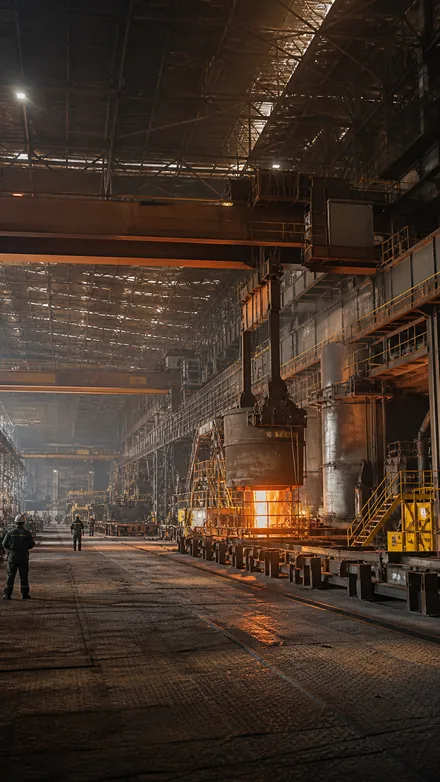
The heavy industry sector has a multi-layered legal structure because of its capital-intensive investments, long-term supply relationships, large-scale production facilities, use of technical equipment, energy needs, occupational safety obligations and international trade links. In fields such as iron and steel, metalworking, machinery, heavy equipment, chemicals, production plants, industrial infrastructure and similar activities, legal risks are rarely limited to a single contract or dispute.
For heavy industry companies, legal matters should be addressed together with the planning of the investment, the construction of the plant, securing financing, the supply of machinery and equipment, production relationships, workforce management, environmental obligations, product liability, exports and international trade.
For this reason, legal work in heavy industry requires several disciplines to be assessed at the same time, such as commercial law, company law, contract law, employment law, environmental law, energy law, competition law, product liability, international trade law and dispute resolution.
Investment, Plant Construction and Supply Contracts
Industrial Investments and Project Structuring
Heavy industry investments are generally high-budget, long-term projects involving many parties. Setting up the legal structure of the investment correctly at the outset is important for reducing the financial and operational risks that may arise later.
In industrial investments, matters such as:
- Investment and shareholders’ agreements
- Corporate structuring
- Share transfers
- Financing agreements
- Project development agreements
- Acquisition of land and facilities
- Construction and plant installation contracts
- Investment incentive and permit procedures
should be assessed from a legal perspective.
Particularly in structures where different investors take part in the same project, the contracts should clearly regulate the partners’ management powers, capital obligations, profit distribution, exit mechanisms and provisions on possible disputes.
Machinery, Equipment and Technology Supply Contracts
In heavy industry businesses, continuity of production depends largely on machinery, equipment and technical infrastructure. A breakdown in a major part of the production line may lead not only to repair costs but also to lost production and failure to meet commercial commitments.
For this reason, machinery and equipment supply contracts should regulate in detail not only the sale price but also the technical specifications, performance criteria, installation, commissioning, testing procedures, warranty, maintenance and technical support provisions.
In particular, it is important for the contract to set out clearly provisions such as:
- Technical performance guarantees
- Capacity criteria
- Factory acceptance tests
- Site acceptance tests
- Installation and commissioning
- Warranty periods
- Supply of spare parts
- Maintenance and service obligations
- Delay penalties
- Liability for lost production
EPC, Construction and Plant Installation Contracts
EPC (engineering, procurement and construction) contracts, under which engineering, procurement and construction activities are carried out together, may be used to build large industrial plants. Key issues in these contracts include the contractor’s liability and the delivery of the project in accordance with the technical specifications and on time.
Plant installation contracts should regulate in detail:
- Scope of work
- Project schedule
- Interim deliveries
- Technical specifications
- Testing and acceptance procedures
- Delay provisions
- Performance guarantees
- Variation orders
- Force majeure
- Final acceptance
Since changes in scope, requests for additional work or cost increases may arise during the project, how change management will be handled is also one of the important parts of the contract.
Raw Materials and Long-Term Supply Relationships
Heavy industry production depends on a regular and uninterrupted supply of raw materials. Long-term supply contracts may be concluded for metals, ores, chemicals, energy inputs or specially manufactured parts.
In such contracts, price changes, exchange rates, energy costs and global commodity prices may create significant risks.
In long-term supply contracts, provisions such as:
- Price adjustment mechanisms
- Minimum and maximum purchase quantities
- Quality standards
- Delivery schedules
- Late and incomplete delivery
- Right to alternative supply
- Force majeure
- Hardship and excessive difficulty of performance (aşırı ifa güçlüğü)
- Termination of the contract
are important for commercial sustainability.
Production, Product Liability and Occupational Safety
Production, Quality and Technical Liability
In heavy industry production, technical standards and quality criteria play an important role in determining legal liability. If a part, machine or industrial product does not conform to the technical features specified in the contract, claims for defective performance and compensation may arise.
In quality disputes:
- Technical specifications
- Quality control reports
- Certificates
- Laboratory and test results
- Production records
- Sample results
- Delivery and acceptance reports
may be among the important evidence in assessing the dispute.
In particular, where industrial products are used in another production line, the damage caused by a defective part may be much higher than the price of the original product. For this reason, limits of liability and provisions on indirect damage should be clearly regulated in the contract.
Product Liability and Industrial Damage
If heavy industry products are unsafe or if third parties suffer harm because of a technical failure, product liability may arise.
A defect in a machine, piece of equipment or industrial part may lead to serious consequences such as:
- Lost production
- Damage to the plant
- Injuries to employees
- Damage to third parties
- Fire or explosion
- Chain production defects
In such disputes, the design of the product, the production process, the instructions for use, the maintenance obligations and the conditions under which the user used the product should be assessed together.
Occupational Health and Safety
Heavy industry is among the sectors with high occupational health and safety risks. Heavy machinery, high temperatures, pressurised systems, chemicals and intensive production processes may create serious risks of workplace accidents.
The employer must carry out a risk assessment, give employees the necessary training, provide suitable protective equipment and organise the working environment in accordance with the legislation.
When a workplace accident occurs, the following should be examined together:
- The employer’s liability
- The employee’s fault
- The subcontractor relationship
- The suitability of work equipment
- Risk assessment
- Training records
- Occupational safety procedures
Subcontractor Relationships
In large industrial plants, services such as maintenance, installation, security, cleaning, logistics and technical service may be obtained from third-party companies. This makes subcontractor (alt işveren) relationships important.
Subcontractor agreements should clearly regulate the scope of services, responsibility for employees, occupational health and safety, insurance, confidentiality, site rules and liability for damage caused to third parties.
The limits of liability for workplace accidents and of the employer’s responsibility are particularly important where employees of more than one company work on the same production site.
Environment, Energy and Industrial Land
Environmental Law and Industrial Activities
Heavy industry activities are subject to strict regulation because of their environmental impact. Air emissions, waste water, hazardous waste, chemicals and energy consumption of production plants may give rise to different obligations under environmental legislation.
With regard to environmental obligations, matters such as:
- Environmental permit procedures
- Environmental impact assessment (ÇED) procedures
- Waste management
- Hazardous waste
- Emissions
- Waste water management
- Soil and water pollution
- Administrative sanctions
should be followed from a legal perspective.
It should be borne in mind that an environmental violation may lead not only to an administrative fine but also to wider consequences such as suspension of operations or compensation claims by third parties.
Energy Supply and Continuity of Production
Heavy industry businesses are energy-intensive. Securing electricity, natural gas or other energy sources without interruption and at predictable costs is critical for continuity of production.
In energy supply contracts, provisions such as pricing mechanisms, consumption commitments, interruption conditions, connection responsibilities and termination of the contract should be assessed.
If production plants set up their own energy generation systems, energy investments, licences, grid connection and land use procedures may require separate legal review.
Real Estate and Land Law in Industrial Plants
The legal status of the property to be used is one of the basic elements of an industrial investment. Factory land, organised industrial zones, storage areas and logistics facilities may have different legal statuses.
Before the investment, the following should be examined:
- Title deed records
- Zoning status
- Mortgages and attachments
- Easements
- Expropriation status
- Organised industrial zone (OSB) regulations
- Environmental restrictions
Particularly in high-cost industrial investments, examining the legal status of the property before the investment decision is made is an important risk control.
Competition, Corporate Transactions and Trade Secrets
Competition Law and Industrial Markets
In heavy industry sectors, high investment costs and the limited number of producers can make competition law important.
Sharing prices, production volumes, customers or regions between competing companies may create serious risks under competition law.
In addition, in distribution, supply and long-term purchase agreements, provisions such as:
- Exclusivity
- Non-compete
- Minimum purchase obligations
- Price setting
- Information sharing with competitors
should be assessed under competition law.
Mergers, Acquisitions and Due Diligence in Industrial Companies
Legal due diligence is an important stage when a heavy industry company is transferred or takes on an investor. The company’s facilities, permits, contracts, employees, environmental obligations and pending disputes may directly affect the investment decision.
In particular, the legal review may examine:
- Corporate structure
- Shareholding
- Real estate
- Licences and permits
- Environmental obligations
- Employee relations
- Material commercial contracts
- Financing documents
- Pending lawsuits and enforcement files
Since in heavy industry investments there may be a risk of inheriting environmental and technical obligations from the past, it is important that the scope of the legal review is not limited to company documents alone.
Trade Secrets and Technology Protection in Industrial Companies
Production methods, technical drawings, formulas, process know-how, customer lists and pricing policies may be among the important commercial assets of heavy industry companies.
Confidentiality agreements and trade secret policies may be put in place to protect this information when it is shared with employees, suppliers or technical consultants.
Particularly in joint development projects, it should be clearly regulated who owns which technical know-how, how the intellectual property rights arising from the project will be shared and under what conditions the information may be shared with third parties.
Digital Production and Industrial Cybersecurity
Industry 4.0, Automation and Digital Production Systems
Automation systems, industrial IoT devices, AI-assisted maintenance systems and data analytics applications are becoming increasingly common in heavy industry plants.
The use of these technologies raises new legal issues in terms of protecting production data, software licences, data ownership and cybersecurity.
In particular, where a production line depends on third-party software systems, the following should be clearly regulated in the contracts:
- Software licence terms
- System downtime
- Data ownership
- Remote access rights
- Cybersecurity
- Maintenance and update obligations
Industrial Cybersecurity
In digitalised industrial plants, cyberattacks may cause not only loss of information but also a complete halt in production. The takeover of production control systems or industrial automation infrastructure may cause major economic and physical damage.
For this reason, in heavy industry companies, cybersecurity should be treated not merely as a technical responsibility of the IT department but as a contractual and corporate risk area.
It is important for contracts with technology providers to include provisions on security standards, incident notifications, remote access rights, backups and business continuity.
International Trade, Securities and Production Risks
Exports, Imports and International Industrial Contracts
A significant number of heavy industry companies operate in international markets. Cross-border contracts are of critical importance in the import and export of machinery, raw materials, equipment and industrial products.
In international commercial contracts, matters such as:
- Product and technical specifications
- Incoterms delivery terms
- Payment methods
- Letters of credit and bank guarantees
- Carriage and insurance
- Customs obligations
- Governing law
- Arbitration or competent court
should be regulated in detail.
In international sales of machinery and plants, exchange rates, sanctions regimes, import restrictions and force majeure provisions may become particularly important because of long delivery and installation periods.
Bank Guarantees and Financial Securities
In large industrial projects, the parties may use bank guarantees (teminat mektubu), advance payment bonds or performance guarantees to secure contractual obligations.
Under what conditions the guarantees can be called, their period of validity and their relationship with the contract have important legal consequences.
Particularly in high-value projects, preparing the security mechanisms in line with the main contract is important for controlling financial risks.
Force Majeure and Production Interruptions
In heavy industry businesses, a halt in production can have major economic consequences. Natural disasters, power cuts, war, international sanctions, import restrictions or supply chain disruptions may affect the performance of contracts.
Which events the force majeure provisions cover, within what period notice must be given and what rights the parties will have if the event continues for a long time should be regulated in the contract in advance.
Particularly in industrial businesses that depend on global supply chains, not only classic force majeure provisions but also adaptation mechanisms for situations where the economic balance changes severely may be considered.
Resolving Heavy Industry Disputes
Heavy industry disputes are often high-value and technical in nature. A machine failing to reach the expected capacity, late delivery of a production plant, raw materials not meeting technical standards or large-scale production losses may give rise to significant compensation claims.
In these disputes, not only the contract text but also technical specifications, engineering reports, test results, project correspondence and production records should be assessed together.
Depending on the nature of the dispute, negotiation, mediation, litigation or arbitration may be chosen. Arbitration mechanisms may also be used in international and technical industrial projects.
Scope of Legal Work in Heavy Industry
The legal needs of heavy industry companies arise over a long process that runs from the initial stage of the investment to the operation of the plant, and from production to export. For this reason, the legal assessment should be made not only on the basis of individual contracts but taking into account the business’s production and investment model.
As Attorney Ezgi Çalışkan, in my legal work in the heavy industry sector I assess matters such as investment and project contracts, machinery and equipment supply, production and quality disputes, occupational health and safety, environmental obligations, commercial contracts of industrial companies, international trade and the resolution of technical disputes together with the operational structure of the sector. In heavy industry projects involving high capital and long-term commitments, building the legal structure in parallel with the investment and production processes allows the business’s commercial decisions to be made on a sounder footing.