
Services
Vehicle Depreciation Lawyer
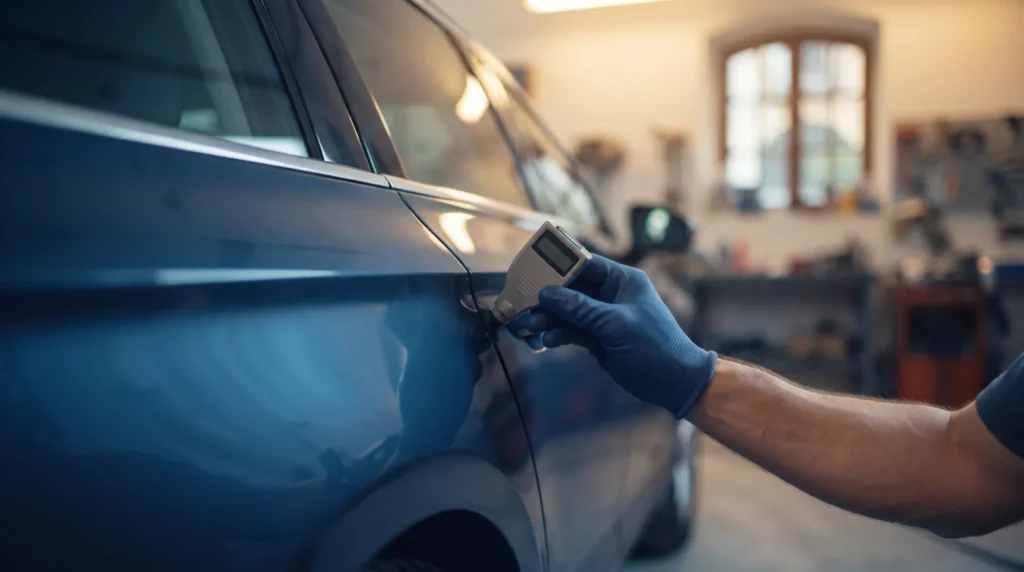
Vehicle depreciation (araç değer kaybı), also known as diminished value, is the loss suffered when a vehicle damaged in a traffic accident, even after it has been repaired, can only find a buyer on the second-hand market at a lower price than before the accident. A vehicle owner who was not at fault in the accident, or was less at fault, can claim this loss from the compulsory traffic insurance of the other vehicle or from the at-fault driver and the vehicle’s registered keeper (araç işleteni). As a vehicle depreciation lawyer in Mersin, I pursue these claims from the insurance application through to the Insurance Arbitration Commission (Sigorta Tahkim Komisyonu) and the courts.
With the estimation tool below you can roughly calculate your vehicle’s loss in value, and then review the factors that affect the calculation and the application process.
Who Is Paid for Vehicle Depreciation?
To claim depreciation, the following conditions must all be met:
- The other party must have been at fault in the accident; if you were not fully at fault, you can claim in proportion to the other party’s degree of fault.
- The vehicle must have suffered real damage in the accident and been repaired or had parts replaced.
- The damage must be of a kind that affects the vehicle’s market value. In minor damage where only parts such as plastic trim, headlights or glass have been replaced, depreciation often does not arise or remains low.
Your own comprehensive insurance (kasko) policy generally does not cover depreciation; as a rule, depreciation is claimed from the compulsory traffic insurance of the other vehicle.
How Is Vehicle Depreciation Calculated?
Depreciation is the difference between the vehicle’s second-hand market value before the accident and its market value after the repair. The main factors affecting the calculation are:
- The vehicle’s make, model, age and mileage
- The extent of the damage, the repair method and the parts replaced or repainted
- The vehicle’s previous damage and insurance claim records (tramer)
- Market demand for the vehicle
Insurance companies mostly assess applications according to the calculation method in the general conditions of compulsory traffic insurance. When the dispute is taken to the Insurance Arbitration Commission or to court, however, depreciation is usually determined through an examination by a court-appointed expert (bilirkişi), based on the vehicle’s actual market values. For this reason, there can be significant differences between the amount offered by the insurance company and the amount determined by the court-appointed expert.
Preliminary estimate tool
Estimate the diminished value of your vehicle
Your information is processed only in your browser; it is not sent anywhere and is not stored.
Estimated diminished value range
This result is only an approximate preliminary estimate. Insurance companies calculate according to the method set out in the general policy conditions, while courts usually rely on a court-appointed expert's assessment of the vehicle's actual market values; the exact amount is determined by a vehicle appraisal and an expert report.
Which Types of Damage Cause Depreciation?
The most important factor in determining whether depreciation arises is how far the damage affects the vehicle’s body and safety structure.
Damage that usually causes depreciation:
- Replacement of sheet-metal body parts such as doors, wings, the bonnet or the boot lid
- Repainting of more than one part
- Repairs to the roof, floor pan, pillars or chassis
- Deployment of the airbags
- The vehicle being recorded as “heavily damaged” (ağır hasar) in its damage record
Situations where depreciation is low or does not arise:
- Replacement only of plastic and glass parts such as bumpers, headlights, rear lights, mirrors or windows
- Minor paintwork on a single part
- Very old or very high-mileage vehicles
- Vehicles that already had a heavy damage record before the accident
What to Look for in the Damage Assessment Report
The strength of a depreciation claim depends largely on the damage assessment report (ekspertiz raporu). The report should fully include the following:
- An itemised list of the parts replaced, repaired and repainted
- Whether the parts are original or equivalent parts
- Photographs of the damage and the repair process
- The vehicle’s condition, mileage and equipment before the accident
- Which comparable vehicles were used to determine the pre-accident market value
The report of the loss assessor appointed by the insurance company is not binding on the court. If the report contains incomplete or incorrect findings, an independent damage assessment can be obtained; when the dispute is taken to arbitration or to court, an examination by a court-appointed expert is requested.
The Depreciation Claim Step by Step
- Gathering documents: The accident report form or accident report, vehicle registration, driving licence, the other vehicle’s policy details, the damage assessment report, the repair invoice and photographs of the damage.
- Written application to the insurance company: A depreciation claim is submitted to the compulsory traffic insurer of the other vehicle. The company must respond within 15 days.
- Assessing the offer: The company’s offer is checked against the vehicle’s actual market value. A release (ibraname) accepting an incomplete payment as “full and final” should not be signed.
- Arbitration or lawsuit: If the application is rejected, left unanswered or an incomplete payment is made, an application can be made to the Insurance Arbitration Commission or a lawsuit can be filed.
Other Losses That Can Be Claimed Alongside Depreciation
- Repair costs: If they have not been paid, or have been only partly paid, by the other party’s insurance.
- Loss of use (replacement vehicle) costs: The loss arising from not being able to use the vehicle while it is in the repair shop.
- Loss of earnings: For taxis, shuttle vehicles or commercial vehicles, the loss of income during the period the vehicle could not operate.
- Towing and damage assessment costs.
If anyone was also injured in the accident, for claims relating to bodily injury see the traffic accident lawyer in Mersin page.
Limitation Period
Like other compensation claims arising from a traffic accident, vehicle depreciation claims become time-barred two years after the owner learns of the loss and the person liable, and in any event ten years after the date of the accident. The fact that the vehicle has been sold does not in itself extinguish the depreciation claim; however, the timing and price of the sale may affect the calculation.
The Vehicle Depreciation Process in Mersin
Because depreciation lawsuits can also be filed in the court of the place where the accident occurred, for accidents in Mersin and its districts the case can be heard in Mersin. Applications to the Insurance Arbitration Commission can be made electronically, so the vehicle owner living in another province does not prevent the process. Damage assessments and court-appointed expert examinations are planned taking into account where the vehicle is located.
Frequently Asked Questions
Who pays for vehicle depreciation?
As a rule, depreciation is paid by the compulsory traffic insurance of the other vehicle that was at fault in the accident, within the policy limits. The at-fault driver and the vehicle’s registered keeper are liable for any loss exceeding the limit.
Is the result given by the calculation tool definitive?
No. The tool gives an approximate range based on the vehicle, the level of damage, age, mileage, previous damage record and degree of fault. The definitive amount is determined through a damage assessment and a court-appointed expert examination based on the vehicle’s actual market data.
Can I claim depreciation from my own comprehensive insurance?
Comprehensive insurance policies generally do not cover depreciation. Depreciation is claimed from the compulsory traffic insurance of the other vehicle.
Does replacing a bumper or headlight cause depreciation?
In damage where only plastic and glass parts such as bumpers, headlights or mirrors have been replaced, depreciation often does not arise or remains very low. Replacement of sheet-metal body parts and chassis repairs, on the other hand, significantly increase depreciation.
Can I claim depreciation if I am shown as at fault in the accident report form?
If you were fully at fault, you cannot claim depreciation. In the case of partial fault, you can claim in proportion to the other party’s degree of fault. The assessment of fault in the report form can be challenged and a report from a court-appointed expert can be obtained.
What can I do if the depreciation offered by the insurer is low?
You can reject the offer without signing a release, apply to the Insurance Arbitration Commission or file a lawsuit. At this stage, the court-appointed expert makes a new calculation based on the vehicle’s actual market values.
I have sold the vehicle. Can I still claim depreciation?
Yes. Because the loss arises at the time of the accident, the sale of the vehicle does not in itself extinguish the right to claim; an application can be made within the limitation period.
How long does a depreciation claim take?
The insurance company must respond within 15 days. If the dispute is taken to arbitration or to court, the process can take from a few months up to a year, depending on the court-appointed expert examination.
Get an Assessment of Your Depreciation Claim
To assess whether the insurance company’s offer covers your vehicle’s actual loss in value and which route to follow, you can reach me through the contact page.